




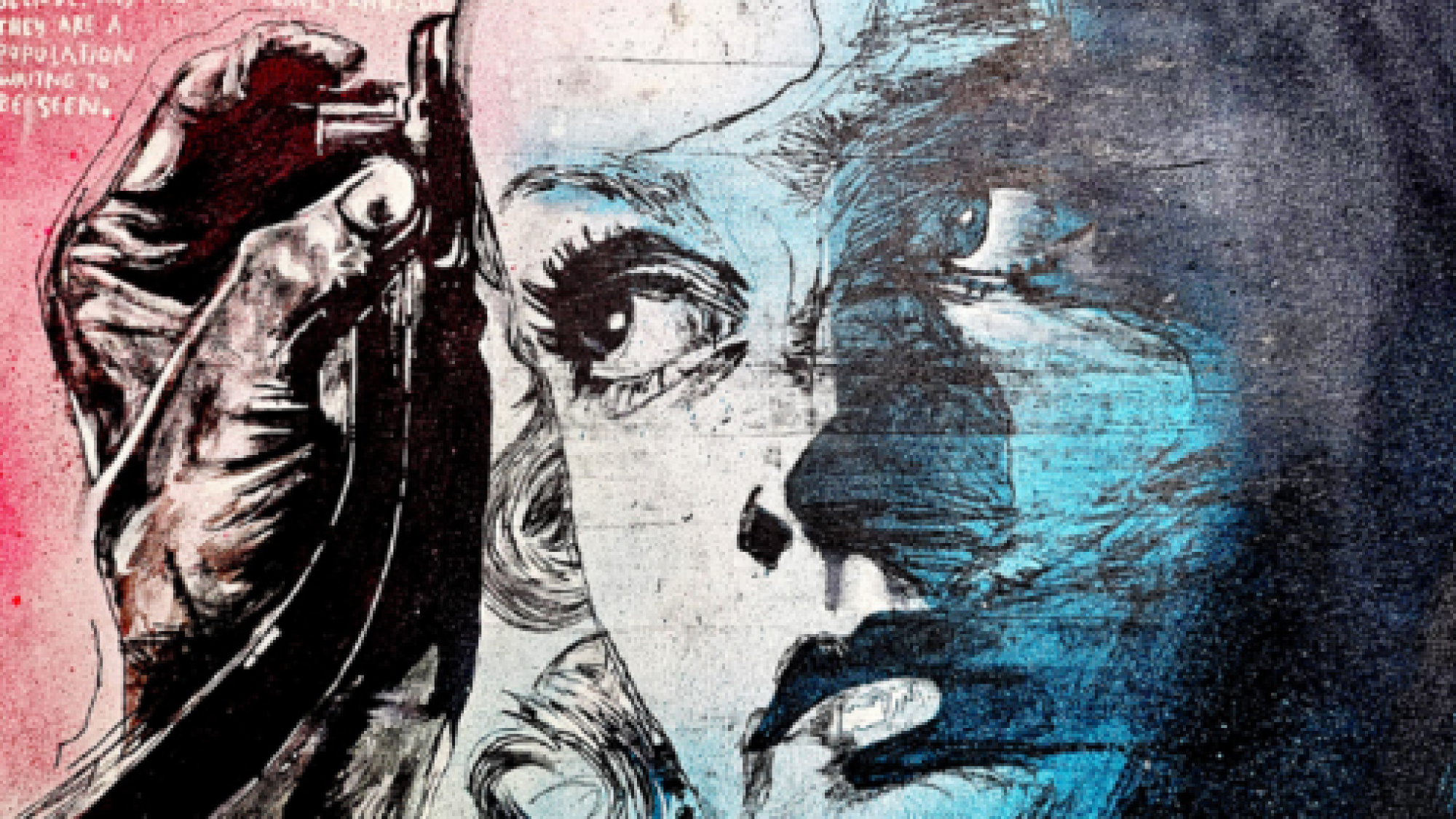
A new “Graphic Medicine” initiative is bringing a creative edge to one of healthcare’s most persistent challenges: effectively communicating health inequalities to those in positions to drive change.
Led by the Digital Healthcare Technology Accelerator and managed within the Centre for Digital Healthcare Technology (CDHT), a new and fresh approach is exploring how to tell the story of health inequality in Belfast. A creative collaboration with illustrator Conor McClure of the Belfast School of Art at Ulster University, explores how visual storytelling can help translate complex social determinants of health into more impactful, human-centred narratives.
While awareness of the link between deprivation and poorer health outcomes is widespread among scientists, researchers, policymakers, and healthcare leaders, converting that understanding into meaningful action remains a significant hurdle. By using illustration and graphic narratives, the initiative seeks to make these issues more tangible and emotionally resonant, encouraging stakeholders not just to understand inequality, but to rethink how they respond to it.
The work was exhibited at the HIRANI Health Tech Spring event in Titanic Museum, Belfast on Thursday 23 April, from 1–4pm. Alongside Conor, Belfast City Council’s Deirdre Ferguson (City Innovation Programme Lead) and Ulster University’s Stephen McComb (Project Lead for the Place-Based Impact Acceleration Account) supporting this initative and welcomed thoughts and discussions at the exhibition.
One of the works is "Waiting To Be Seen". This painting addresses the persistent inequalities within women’s health, shaped by systems historically built on gender-blind foundation. It reflects how women’s symptoms and experiences are often overlooked, minimised, or reframed, leading to delays in diagnosis, gaps in treatment, and a lack of appropriate care. The work highlights the gap between being heard and being believed. It points toward the need for healthcare systems that recognise women’s experiences in full, respond with accuracy and urgency, and move beyond listening to meaningful understanding and action.
HIRANI's Health Tech Spring conference took place on Wednesday 23 and Thursday 24 April 2026, where innovation, collaboration, and new approaches to longstanding challenges in healthcare took centre stage.